


How to Plan a Black Sea Tour: Route, Duration and Practical Information from Trabzon to Artvin
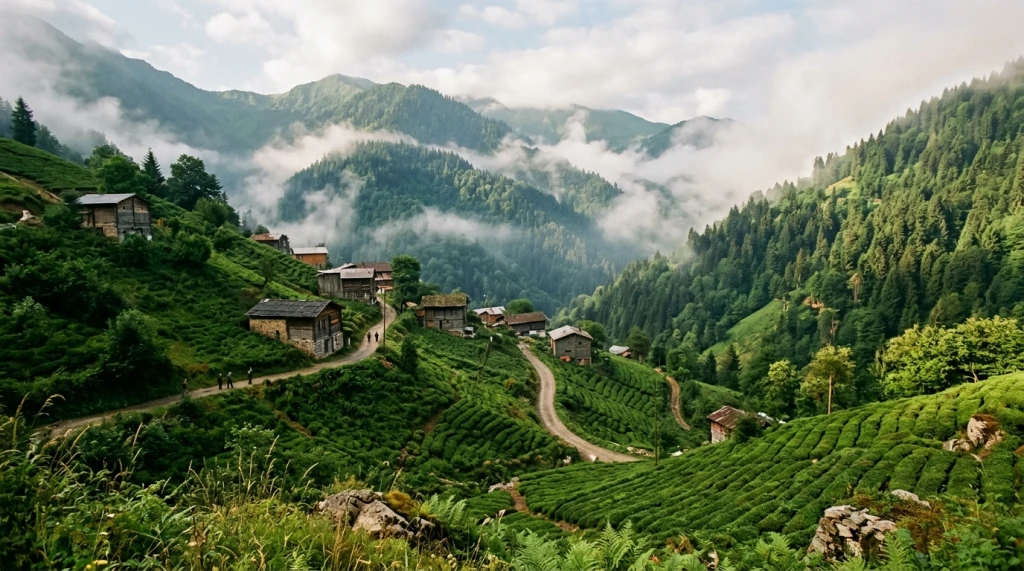
The Trabzon-Rize-Artvin triangle is one of Türkiye's most intense regions for combined nature and history experiences. Climbing from the coast to the highlands can gain more than 2,000 meters in elevation; the scenery changes by the hour, and so do road conditions. For this reason, it is necessary to build the route with a clear logic, know how much time to allocate to each stop, and check whether the highland roads are open according to the time you will travel. This guide answers those questions in order.
Where the Route Covers and How the Geography Takes Shape
The backbone of the route is the road axis of Trabzon-Rize-Artvin. Trabzon is a large city on the coast; its airport, central accommodation options and connections to the region make it the natural starting point. Heading to Rize, tea gardens come to the fore; turning off toward Çamlıhemşin brings the Fırtına Valley and Ayder Plateau into the route. In Artvin the picture changes completely: the deep canyon of the Çoruh Valley, the highland herding tradition of Şavşat and the region's distinctive wooden architecture evoke the Caucasian landscape more than the Black Sea coast.
Uzungöl is a highland lake 99 kilometers from Trabzon. Its popularity has grown greatly, so it can get crowded on weekends; arriving early in the morning lets you see the scenery more quietly. The northern route reaching the Batumi border is an option for those who want it, but this guide covers the domestic route within Türkiye.
Which Season to Go and What the Differences Are
The Black Sea's rainy climate applies all year, but there are serious differences between the seasons. July-August is the busiest season; the highlands are open and village festivals continue, but popular spots, especially Uzungöl and Ayder, become busy with crowds. June and September are more balanced: the weather is generally warm enough, crowds are reduced, and the greenery is still vivid.
In May the Black Sea coast is in its flowering period and looks very striking, but high highland roads may not yet be open at that time. Snow usually clears from late November to early April; the roads above Ayder and the high villages of Artvin can become unreachable by car during this period. For those choosing winter, coastal cities and lower valleys remain open to visit, but the mountain route is restricted.
How Many Days to Set Aside and How to Divide the Route
Those wanting to pass through the Trabzon-Rize-Artvin route quickly can consider 4 days as a minimum, but in that case very little time remains for each stop. 6-7 days is a more realistic duration for touring the route without rushing. A reasonable split is 1-2 days for central Trabzon and Uzungöl, 2 days for Çamlıhemşin-Fırtına Valley-Ayder, and 2 days for central Artvin, Şavşat and the surrounding highlands.
Take into account that you travel mountain roads between every place; the transfer from Çamlıhemşin to Artvin in particular is winding and time-consuming. GPS navigation can sometimes direct drivers onto unsuitable roads in this region; route planning based on current highway information is more reliable.
How to Get There and How to Organize Transport
Trabzon Airport is the main gateway to the region; there are direct flights from many cities, especially Istanbul and Ankara. As an alternative to Trabzon, it is also possible to enter Rize by road or Artvin via Erzurum, but flight connections are usually more advantageous in terms of time.
For transport within the region, renting a car or travelling with a tour vehicle are the two main options. If you go with your own vehicle, you need to pay attention to road conditions; vehicle width matters on narrow village roads. Public transport runs between coastal cities, but dolmuş schedules to highland and valley points are quite limited. Therefore, organized tours or car rental provide easier planning in terms of comfort and flexibility. You can look at programs covering the region among the domestic tour options on Turvop and compare which points are included.
Highlight Stops and Setting Expectations Correctly
In Trabzon, the Hagia Sophia Mosque and the historic fabric around it, the city view from Boztepe and a walk through the bazaar are enough for half a day. In Uzungöl, the roughly 40-50 minute walk from the northern end of the lake is the best option for those who want to see the lake in its full extent; from the south the minaret and forest merge, while from the north the mountains come to the fore.
Ayder Plateau is a point with developed infrastructure, including cafes and hotels; it has thermal bath facilities, but capacity can fill up on weekends, so booking in advance is sensible. The old stone bridges in the Fırtına Valley and the Zilkale ruins are among the region's little-known but striking points. In Artvin, the area around Şavşat-Meydancık Castle and the villages of Macahel (Camili) are places where a traveller can feel the region away from the crowds.
Accommodation Arrangements and Points to Watch
Central Trabzon has hotel options for every budget. Uzungöl, Ayder and central Artvin stand out with small-scale pensions and highland houses. In July-August, facilities in Ayder and Uzungöl can fill quickly; at this time, booking at least 2 weeks in advance is the recommended approach.
Visitors choosing accommodation around Şavşat or Meydancık on the Artvin side will find the number of facilities more limited. If you include this area in your program, it is important to confirm your accommodation in advance; if a few places are closed or full, options shrink. It is also a useful plan to base yourself in Artvin city centre and make day trips to the highlands and villages.
Practical Planning Information
- Recommended duration: 6-7 days, minimum 4 days (for main points only).
- Most suitable time: late June – early September; highland roads are open, weather is reasonable, and crowds are lower compared with July-August.
- Trabzon Airport is the most common entry point to the region; it is about 6 kilometers from the city centre.
- Highland roads are generally open from mid-May to early November; exact dates vary by year and elevation, so check before going.
- Travel times on narrow mountain roads can seem long on the map; allow for this difference in your daily schedule.
- Finding parking at Uzungöl and Ayder becomes difficult on weekends and during summer holidays; moving early in the morning is advantageous.
- Points such as the Fırtına Valley bridges and Zilkale are off the main road; they are details to plan for if you are not on a car or guided tour.
- Mobile signal can be weak across much of the region; saving important location information in an offline map app is a practical precaution.
Final Assessment Before Going
When you set up the Black Sea route correctly in terms of season and duration, it offers one of the most rewarding overland journeys in Türkiye. Answering three questions at the decision stage will clarify your plan: Which season are you going in, and are the highland roads open? Will you travel by your own car or through an organized tour? Is there enough time, or will you need to cut some stops? Once these three are settled, everything else falls into place.