


Things to Know Before Visiting Pamukkale: Travertines, Hierapolis, and the Visit Itinerary
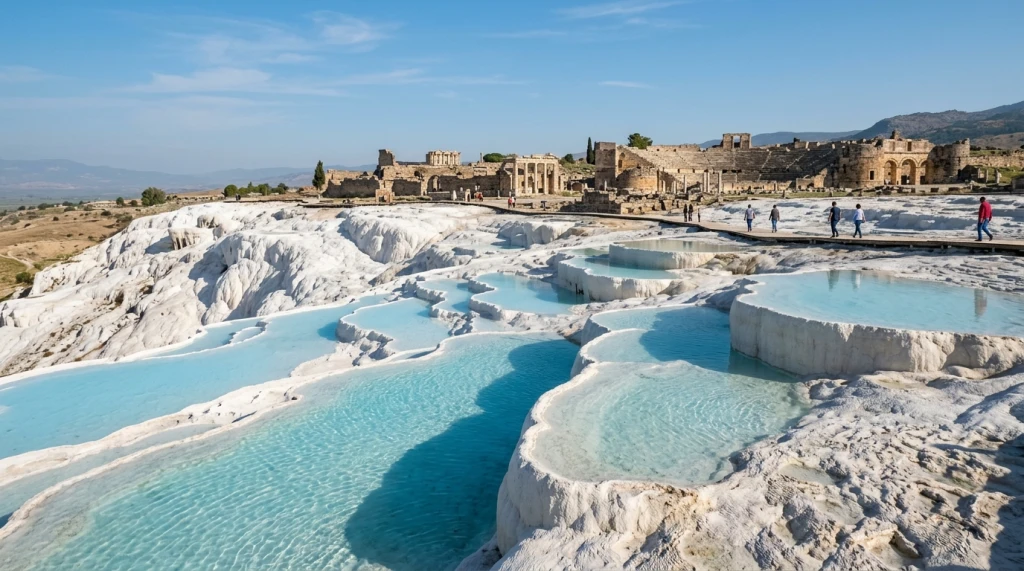
Pamukkale is located on the slope of a small town in Denizli province and forms one of the most unique areas on Turkey's UNESCO World Heritage list with its approximately 2,700-meter-long limestone terraces. The ancient Roman and Hellenistic settlement of Hierapolis atop the terraces is so extensive that it may require a separate day trip. Both areas are visited under the same ticket; however, if you do not plan in advance how much time to allocate to each, you will leave without fully enjoying either.
What Exactly Are Travertines and When Did They Form?
Travertines are calcium carbonate deposits formed when warm, calcium-rich waters rising from underground cool upon reaching the surface and release carbon dioxide. In Pamukkale, this process has been ongoing for tens of thousands of years, creating white and cream-toned, step-like water terraces. Some sections of the terraces still hold water, while others remain dry due to seasonal variations or flow management. Visitors should not expect all pools to be full during their visit: authorities manage water flow rotationally to protect the site. The fully filled blue pools seen in photographs appear only at specific locations and during certain periods, not throughout the entire area.
How Do Visiting Hours and Entry Procedures Work?
The site is open throughout the day; ticket entry is active from early morning until late afternoon. However, crowds peak significantly in the afternoon, especially between 10:00 and 15:00 when bus tours arrive in large numbers. Both the travertines and Hierapolis can be explored with far fewer people during the first hours of the morning or during late afternoon entries. Since entrance fees are determined under cultural heritage regulations, current rates can be found on the Ministry of Culture and Tourism's museum ticket page or at the ticket office; prices are not included in this article. Museum card holders can access part of the area free of charge; conditions may change, so it is advisable to confirm before your visit.
What to Expect When Entering the Travertines
Removing shoes is mandatory for walking on the travertines; there are cloakroom or bagging points at the entrance. The surface can be wet and slippery, so families with young children or individuals with balance issues should come prepared. The walking route is one-way: you can go either from bottom to top or top to bottom, but two-way circulation is not possible. Water temperature hovers around 35–36 degrees Celsius; waiting under the sun for extended periods can be exhausting. Carrying a small water bottle and light, easy-to-remove footwear will make your visit more comfortable.
Hierapolis: Scope of the Ancient City and Key Highlights
Hierapolis was a spa and temple city founded in the 2nd century BC and expanded during the Roman period. The site is quite extensive; touring the theater, necropolis, remains of the Temple of Apollo, the ancient street, and the entire museum building can easily take three hours. The theater is particularly well preserved: with a capacity of approximately 12,000 seats, its stage decorations are still visible today. Also located within the site is Plutonion, known as the "cave of death" (a fissure emitting toxic gases in antiquity), though visitor access is limited. Skipping the Hierapolis Archaeology Museum inside the site is a common mistake; sarcophagi, statue fragments, and mosaics help visitors understand the region's layered history.
When to Visit: Differences Between Seasons
Pamukkale can be visited year-round, but the experience varies significantly by season. April–May and September–October offer the best balance of climate and crowd levels: temperatures range from 18–25°C, travertines are generally fuller, and visitor numbers are lower compared to the summer peak. July–August is the busiest period; temperatures exceed 35°C and waiting times on the travertines increase. In winter, the area is less crowded; although cold, sunny midday days create a pleasant contrast with the warmth of the thermal water. Some facilities and cafeterias may be closed during winter months, so bringing backup snacks is advisable.
Who Is It Suitable For, and Who Should Avoid It?
Pamukkale presents some challenges for visitors with limited mobility. While the ground on the travertines is uneven, much of Hierapolis has a smoother surface; however, the site is vast and involves long walking distances. For families with small children, the slippery ground and barefoot walking require extra caution. From a photography perspective, early morning light highlights the whiteness of the terraces, while in the afternoon, as the sun sets toward the west, reflections in the pools become more prominent. For those not accustomed to hiking, the distances within the site may feel longer than expected: walking from the travertines to the museum, and then to the theater, takes about 20–25 minutes.
Practical Planning Information
Pamukkale is located 18 kilometers from Denizli city center. Direct daily flights are available to Denizli from Istanbul, Ankara, and Izmir; the airport is close to the city, and transfers to the town via shuttle or taxi are easy. Trains connect Izmir and Ankara to Denizli Station, followed by minibuses to the town. Driving from Izmir takes approximately 2.5–3 hours. One full day is sufficient for visiting only Pamukkale and Hierapolis; however, adding the nearby ancient city of Laodicea makes a two-day itinerary more balanced. Accommodation options in the town are plentiful; staying overnight is recommended to enjoy the sunset and nighttime illumination of the travertines. Since swimming and walking are part of the experience, be sure to bring clothes you can change into, a towel, and sunscreen. You can also explore suitable programs among the latest domestic tour options.
Questions Worth Asking Before Evaluating Your Visit
When evaluating a visit to Pamukkale, it is helpful to first clarify your priorities. If you only want to see the travertines, half a day may suffice; if you wish to include Hierapolis, plan for a full day. If you intend to visit the museum as well, set aside at least 4–5 hours. Access rules for natural areas may be updated periodically; checking the latest information on the official website of the Ministry of Culture and Tourism or the site itself before your trip can minimize surprises. Keep in mind that if you wish to swim in a thermal pool, the ancient bath facilities outside the main site have a separate fee and operate under varying conditions each season.