


How to Visit Artvin: Yusufeli, Şavşat and the Region's Visiting Order
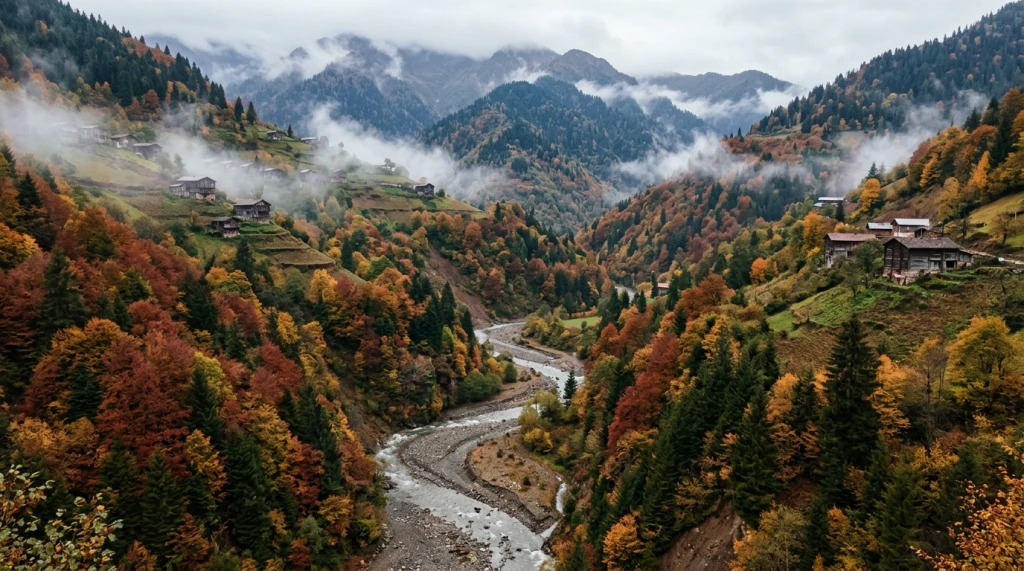
Artvin is one of Türkiye's most mountainous provinces; even the provincial center is built on a steep slope at roughly 600 meters above sea level. The region does not fit into a single route or a single district: the deep valley of Yusufeli, the plateau villages of Şavşat, the subtropical forests of Borçka and the medieval castles of Ardanuç each have a distinct character. This variety makes both the region's appeal and its planning complex. If you do not decide in advance where to go first, how many days to set aside and which season to choose, you may end up lost on one of the side roads that appear at every turn — which is not necessarily a bad thing, but it can be a problem if your time is limited.
The Geography of Artvin: Why It Is Such a Different Place
The northern part of the province is covered with dense forests that receive Black Sea moisture directly. The area around Borçka and Hopa has a character similar to Rize's humidity and greenery. Heading south — especially toward Yusufeli and the Artvin center — the climate quickly becomes drier, vegetation thins out and reddish rocky valleys emerge. Şavşat is different from both: its high-altitude plateau villages, wide pastures and forests that lie under snow in winter present what is almost a separate geography. This diversity turns Artvin into a transit point attracting those who seek both the Black Sea and Eastern Anatolia. Yet the same diversity also explains why trying to see every place on a short visit does not work in practice.
Yusufeli: Before and After the Dam
Yusufeli has undergone a fundamental transformation in recent years. The old town center was largely submerged beneath the reservoir of the Yusufeli Dam; the new settlement was built further up on the valley slope. Visitors who are unaware of this change are often surprised. But the natural beauty of the valley, its rocky canyons and the Çoruh River are still there. The shore of the lake formed by the dam, especially in the morning hours, offers a different aesthetic with the reflection of the rocks on the water. Rafting routes on the Çoruh have largely changed; different points are now used for active rafting. Before going to the region, it is necessary to confirm which routes are currently active, since the reservoir level and river flow vary from season to season.
Şavşat and Its Plateaus: For Those Seeking Silence
Şavşat, a district about 65 kilometers from the Artvin center, lies outside the crowded tourist routes. Şavşat Castle sits right above the town, reachable on foot in 10-15 minutes, and the panoramic view around it makes the castle worth visiting on its own. The main attractions, however, are the high plateaus: Meydancık, Veliköy and Sahara plateaus offer, in summer, a world of nomadic livestock farming, rows of wooden storehouses and minimal modern infrastructure. Some of these plateaus can only be reached by rough roads; it is possible to go with a standard vehicle, but you should consider the steep and winding roads in advance. Accommodation options in Şavşat are limited; if you visit this district, you can either plan it as a day trip from the Artvin center or research the few small guesthouses in the area beforehand.
Borçka Karagöl: The True Face of a Forest Lake
Karagöl, affiliated with Borçka district, is a small crater lake formed in the middle of dense forest at approximately 1200 meters above sea level. The asphalt road to the lake ends at a certain point; from there it is a 2-3 kilometer uphill footpath. This hike should be done in suitable footwear, as the ground can be slippery. The lake's surroundings are entirely covered with trees and there is no open viewing terrace, so you need to walk a little around the shore to find a photographic angle. On weekends, especially in July-August, the Borçka-Karagöl road can see heavy vehicle traffic; setting off early or choosing a weekday makes the visit much more comfortable. At the start of autumn — the second half of September and October — the lake's surroundings take on a markedly different look during the color change of the trees.
When to Go: Differences Between the Seasons
In Artvin, the difference between seasons is decisive for both climate and transport. Summer (June-August) coincides with the region's busiest visiting period; the plateaus are open, roads are passable and the weather is warm. However, in July-August some passes can indeed become crowded. Early autumn, especially from mid-September to the end of October, is the strongest period in terms of color; population is lower and the weather is still suitable for walking. From November onward, snow closures can begin on the Şavşat and Yusufeli roads; the Artvin center remains accessible in winter, but some plateau roads and mountain passes can stay problematic until March. Spring (April-May), when fruit orchards bloom in the Çoruh valley in particular, is a little-known but strong time to visit; some high plateaus may still be snowy, however.
Planning in Artvin: Duration, Transport and Things to Watch For
It is possible to reach Artvin by your own vehicle or by bus via Hopa. Hopa is at the eastern end of the Black Sea coastal road; if you are traveling from Rize or Trabzon, spreading out to the districts via Hopa is the most common approach. Although the distances between the Artvin center, Şavşat and Yusufeli seem short, mountain roads lengthen travel times: from the Artvin center, Şavşat is about 1.5-2 hours away and Yusufeli about 1 hour. For an Artvin trip covering two or three districts, it is therefore necessary to set aside at least 3 full days. A trip limited to Yusufeli and its surroundings can fit into 2 days. For those who also want to add the Şavşat plateaus and Borçka Karagöl, 4-5 days is more realistic. Renting a car provides an important advantage in terms of freedom of movement in the region; public transport options work for travel between the center and the districts, but reaching the plateaus and remote points becomes difficult without your own vehicle or a local guide. yurt içi tur seçenekleri — you can also look at programs covering this route among domestic tour options.
- For mountain roads, pay attention to your vehicle's clearance and your driving experience; the Şavşat plateaus and some Yusufeli side roads are narrow and steep.
- For the Borçka Karagöl hike, non-slip soles and ankle-supporting footwear are essential; regular sneakers are not enough.
- Refuel in the Artvin center; the gaps between stations along the roads to some districts are long.
- On high plateaus, summer nights can drop below 10 degrees Celsius; pack a thin layered clothing set.
- Confirming the current condition of some plateau roads with regional municipalities or the province's outdoor sports groups is a practical step, especially in spring and early winter.
What You Need to Know Before Visiting Artvin
Artvin is one of the places where the approach of "I'll fit everything into one weekend" does not work. The region's strength lies precisely in this: every district and every valley requires separate planning. Yusufeli's changing geography, Şavşat's plateau silence and Borçka's subtropical forests each answer different expectations. If you keep clear what you prioritize when setting your route — active nature walks, cultural heritage, photography or pure quiet — you can give meaning to every day you spend in Artvin. Season, mode of transport and daily schedule directly affect all of these. Weighing these parameters together when deciding will also clarify where to head first once you arrive in the region.