


How to Visit Mount Nemrut: Statues, Sunrise and Visit Schedule
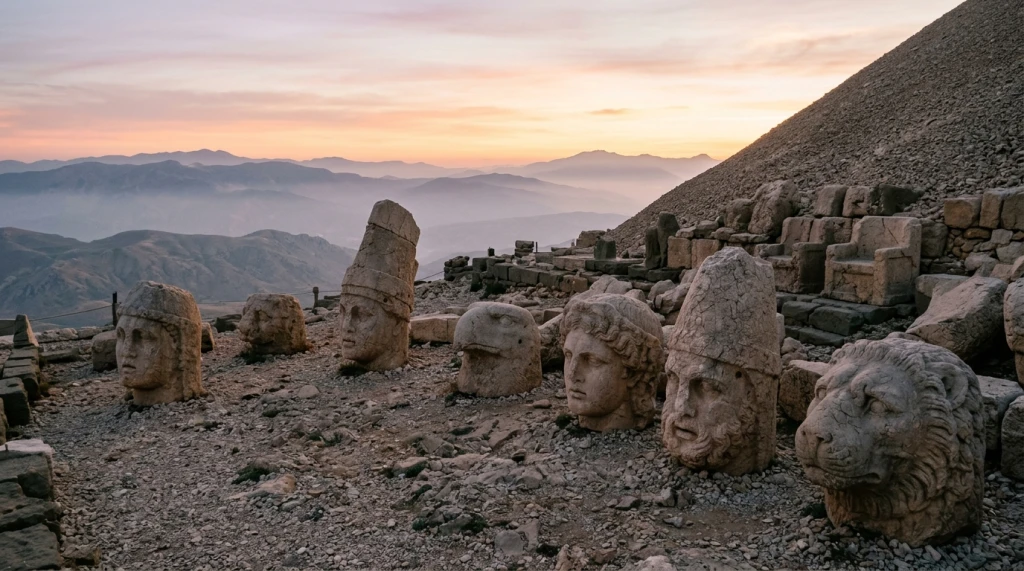
Mount Nemrut is located about 70 kilometers north of Kahta district in Adıyaman province. At the summit are the tumulus built for himself by King Antiochus I, who ruled the Kingdom of Commagene in the 1st century BC, and the giant statues lined up on the eastern and western terraces of this tumulus. Some of the statues reach heights of 8-9 meters; the heads of some statues lying on the ground, separated from their bodies, are the work of earthquake movements and centuries. What makes the site unique is not only its scale: it reflects a syncretic belief world that combines Greek, Persian and Armenian iconography under one roof.
Ascending to the Summit: What to Expect on the Route
Vehicles can reach the parking area about 500 meters below the summit. From there, the walk to the summit takes approximately 20-25 minutes; the path is stony and slightly steep. Visitors with heart or joint problems should not underestimate this distance. There are no stairs or railings along the way, and the ground is covered with rough volcanic stones. Footwear choice is therefore decisive: climbing in sandals or flat everyday shoes is difficult, while ankle-supporting hiking shoes are much more comfortable. If you are climbing at midnight or in the early morning hours, a headlamp is essential; the lighting around the parking area is quite limited.
Sunrise or Sunset: The Difference Between the Two Terraces
The vast majority of visitors come for sunrise; this preference stems from the eastern terrace receiving the morning light head-on. The eastern terrace houses the best-preserved examples of the lion, eagle and king statues, and the light falling on the statues as dawn breaks offers a very powerful composition for photography. The western terrace, on the other hand, has an advantage in the evening hours; it directly captures the sunset light. The two terraces are about 10-12 minutes apart on foot. Those without time constraints can see both terraces in the same visit; setting aside a total of 2-3 hours for the summit is sufficient.
When to Go: Clear Seasonal Differences
The site is open to visitors for about eight months of the year; between late November and early March, however, reaching the summit becomes difficult due to heavy snow and poor road conditions, and in some years becomes impossible. The most suitable periods are the May-June and September-October ranges. In July and August the summit temperature rarely exceeds 20 degrees, but the valley floors become very hot; in these months sunrise time falls around the 05.00-05.30 band, which makes spending the night near the area almost necessary. From late May through September the weather is milder and the sunrise time is a bit more reasonable. Those who want to go in winter should check with local sources whether the road is closed before setting out.
How to Get There: Via Adıyaman and Kahta
The main entry point is Adıyaman. There are regular flights to Adıyaman from Ankara and Istanbul. From Adıyaman airport, the trip to Kahta district takes about 1 hour by car. Kahta serves as the accommodation and service hub for Nemrut tours. Minibus tours to the summit operate from Kahta, and these tours depart after midnight especially for sunrise. You can also reach the summit by private vehicle; the road is paved but narrow and winding. Kahta can also be reached via Diyarbakır or Şanlıurfa; the road distance from either city is about 2.5-3 hours. A regional tour combining Şanlıurfa or Diyarbakır is the most common way to visit.
What's Nearby: Don't Go to the Site Just for the Statues
Limiting a visit to Mount Nemrut to a single point means missing the real richness the region offers. Around Kahta, the ancient city of Arsemia from the Commagene period, with its rock reliefs and inscriptions, is a short but meaningful additional stop. The Cendere Bridge is a Roman-period structure from the 2nd century AD that still stands firm, and stopping by takes no more than 20 minutes. The Atatürk Dam lake can be used as a scenic stop along the route. If broader planning is involved, Balıklıgöl, Göbekli Tepe and Harran in Şanlıurfa are considered the main stops of a southeastern route that can be combined with Nemrut.
Who It Suits and Who Finds It Hard
Mount Nemrut is a destination that does not suit every age and fitness profile equally. The walk to the summit is short but steep; people with altitude sensitivity or heart and blood pressure problems should consult a doctor on this. It is possible for families with children, but when planning, one should account for small children who would need to be woken around 03.00-04.00. The site is very suitable for photographers, especially nature and heritage photographers wanting to capture the morning light. For visitors with no interest in history who dislike outdoor walking, the region's other stops may appeal more than the site itself.
Practical Planning Information
- Realistic time for the visit: 2-3 hours for the summit alone; a full day can be planned by adding Cendere and Arsemia.
- Accommodation: There are various options in Kahta district; staying in Kahta the night before is almost necessary to catch the sunrise.
- Best season: May-June and September-October. Crowds peak in July-August.
- Transport options: Fly to Adıyaman and take a minibus or rent a car to Kahta. Or by road from Şanlıurfa or Diyarbakır.
- Summit weather conditions: The summit can be 10-15 degrees colder than the valley and windy; it makes sense to carry an extra layer even in mid-summer.
- Entrance fee: National park fees may change; for current information, check the official page of the Ministry of Culture and Tourism.
- Regional tour: Combined with Şanlıurfa and Gaziantep, Nemrut forms a meaningful southeastern route.
The Key Questions Shaping the Visit
When planning Mount Nemrut, it is enough to ask yourself: is seeing the sunrise a priority, or do you prefer a more relaxed visit in the afternoon? Will you stay overnight in Kahta or make a day trip from Adıyaman? Are the surrounding Commagene remains part of your plan? Your answers to these questions will determine the accommodation point, the mode of transport and the time you climb to the summit. Following the weather forecast closely in case of the highest possible cloud or dense fog is also an important practical step, especially if you are expecting sunrise.
You can review the domestic tour options covering this region and choose the one that suits your itinerary.