


Things to Know Before Setting Out on Umrah: Process, Preparation and Daily Routine
Planning an Umrah journey is a different process from booking a holiday. Weather conditions, crowded periods, physical preparation and official procedures are all topics that need to be considered together. Moreover, some of these decisions are interconnected: the choice of season directly affects both comfort and crowd density. For those who are just beginning to plan the trip, this article offers a general yet concrete overview of the entire process.
Which Period of the Year Should You Go?
Umrah can be performed during most of the year, except for the few weeks that coincide with the Hajj period. Mecca's climate directly shapes this choice. In the summer months (June–August), daytime temperatures reach 40–45 degrees; the time spent outdoors during this period can be demanding both in terms of energy and health. Winter months (November–February) are more reasonable climatically; daytime temperatures range between 20–28 degrees, and nights are cool.
The Ramadan period is a separate category. Crowds reach their peak during this time; especially in the last ten days, congestion increases greatly at the entry and exit times of Masjid al-Haram. For those who prefer the spiritual atmosphere, Ramadan may be a meaningful choice, but physical fitness and tolerance for crowds matter even more during this period. For families with children or first-time travelers, the January–March period is generally a more balanced option.
How Do Visa and Official Procedures Work?
Entry into Saudi Arabia for Umrah purposes requires an Umrah visa. This visa cannot be obtained through individual application; it is issued through tour operators authorized by Saudi Arabia. Therefore, tour booking and the visa process are intertwined.
Your passport must have a validity of at least six months at the time of the visa application; this period is updated from time to time. In addition, the meningitis vaccine has long been among the documents required for entry. However, entry requirements may change; before travel, it is necessary to confirm current information from the Saudi Consulate or the Turkish Ministry of Foreign Affairs. The tour operator usually provides guidance on this matter, but the final responsibility belongs to the traveler.
What Should You Pay Attention to When Choosing a Tour?
The contents of Umrah tours can differ considerably from one another. Accommodation's proximity to the Haram, the number of days to be spent in Mecca and Medina, how transfers are organized, and the scope of guiding services are among the key points. Staying at a hotel within walking distance of the Haram versus one 3–4 km away makes a significant difference in daily fatigue and in reaching prayer times.
Tour durations also vary: 7-night programs are usually planned with an emphasis on Mecca; 10–14-night programs include a visit to Medina and offer more time around the Prophet's Mosque. Short tours may suffice for first-timers, but it is necessary to be prepared for the pace and crowds. You can compare umrah tour options and choose the one that suits your schedule and budget.
How Does the Daily Routine Take Shape in Mecca?
Masjid al-Haram is organized around the five daily prayers, and prayer times set the rhythm of the day. For those who want to go to the Haram before the dawn prayer, an early start is unavoidable. During the noon and afternoon prayer times, especially in summer, it becomes difficult to spend long periods outdoors. Therefore, early mornings and late afternoon hours are more suitable both for worship and for exploring the surroundings.
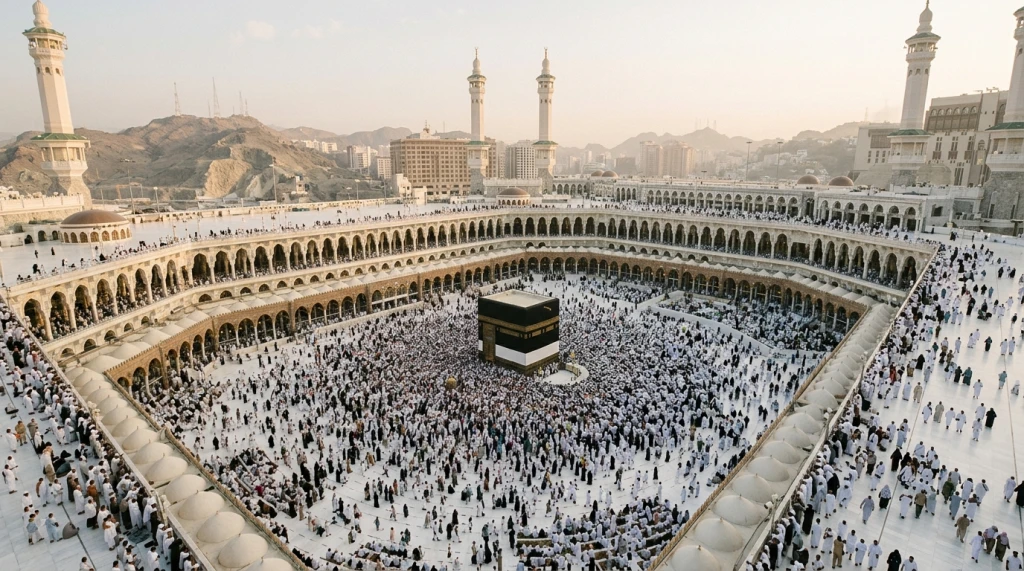
The crowd around the Kaaba for tawaf varies depending on the day of the week and the hour. Fridays are the busiest day; the early morning hours are relatively quieter. Zamzam water can be drunk at various points inside the Haram. The lower floors and surrounding arrangements of Masjid al-Haram are constantly being expanded, so the guidance of your tour leader is a great help on the first day.
How Long Should You Spend in Medina?
Medina is usually scheduled either before or after Mecca; this order changes according to the flight and land route. The Prophet's Mosque is the central point of Medina. Prayer times structure the daily routine here as well. Finding Turkish-speaking guides around the Haram area is quite easy, which eases communication.
2–3 days is a reasonable duration for Medina; within this time, it is possible to comfortably see the area around the Prophet's Mosque, make short visits to historical sites, and pray without missing prayer times. Quba Mosque and the Trench area are places frequently included in sightseeing tours; these locations are usually mentioned in the tour program.
Physical Preparation and Health
The Umrah journey involves more walking than expected. Tawaf distance inside the Haram, the sa'i run, and travel between the hotel and the Haram add up to 10–15 km of walking per day, which is typical. Those with knee, back or joint problems are advised to consult a doctor for an evaluation.
Depending on humidity and temperature, the body's fluid needs increase. Although Zamzam water can be drunk freely in the Haram, carrying water with you is a practical precaution, especially on days spent for long periods. Those with chronic conditions should carry sufficient medication in their hand luggage; access to medication in checked bags can cause problems during transit waiting times.
Practical Planning: Duration, Transport and Points to Note
- Total tour duration: Mecca-focused programs are usually planned for 7 nights, programs including Medina for 10–14 nights.
- Transport: There are direct flights from Istanbul and Ankara to Jeddah or Medina airports; the tour operator organizes airport transfers.
- Seasonal advice: November–March is the most balanced period climatically; Ramadan is crowded but offers a different atmosphere.
- Ihram cloth and sandals: For men, at least two sets of seamless ihram cloth are needed; sturdy sandals suitable for long walks are important.
- Currency: The Saudi Riyal is accepted everywhere in the region; currency exchange offices are available around the airport and hotels.
- Visa and health documents: Passport validity and vaccination requirements should be confirmed before travel from the Saudi Consulate or the Turkish Ministry of Foreign Affairs' current sources.
- Religious guidance: For questions on how to perform worship, the publications of the Presidency of Religious Affairs (Diyanet) and your tour guide are the right sources to consult.
Final Assessment Before Departure
Once the decision to perform Umrah has been made, the next step is to choose a tour that suits your schedule and needs. Distance of accommodation from the Haram, how many days will be spent in Mecca and how many in Medina, and the language and content of the guiding service are concrete criteria to consider when comparing. Choosing the season is also not a decision to postpone; especially for first-timers, crowd levels and climate balance are the two most decisive factors.