


How to Tour Barcelona: Gothic Quarter, Sagrada Família and Visit Order
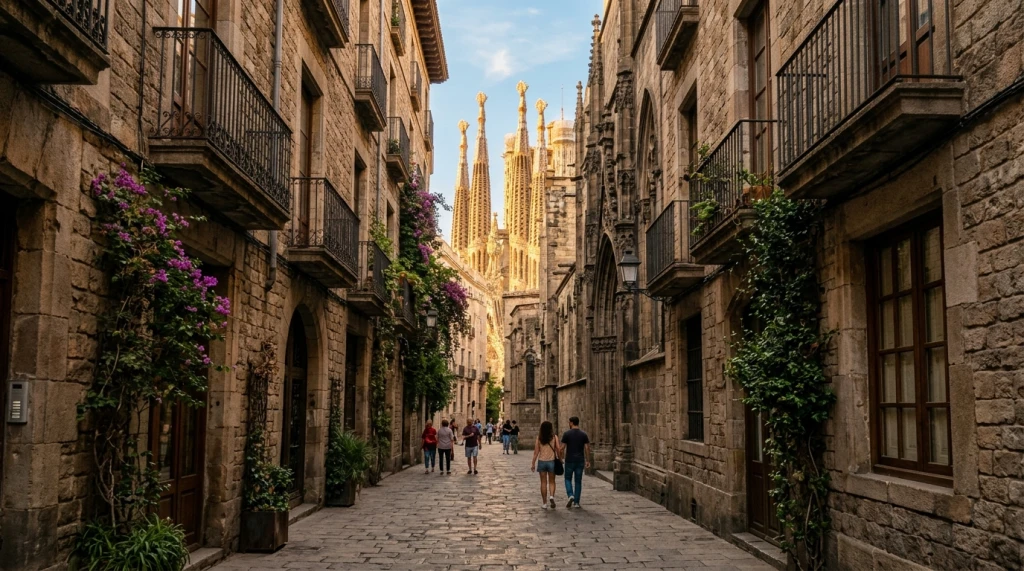
Barcelona is located on the Mediterranean coast in the northeast of Spain, as the capital of the Catalonia region. With a population of about 1.6 million, this city is counted among the cities that attract the most tourists per year in the world; however, this popularity comes at a cost: with a poorly planned visit, you may lose time in queues, crowded squares, and places that have become overly commercial. Knowing when, how much, and in what order to explore the city changes the entire Barcelona experience.
The Gothic Quarter: The Oldest Layer of the City
Barri Gòtic, that is, the Gothic Quarter, is the historic core of the city. Walls dating back to the Roman period, a medieval cathedral, and intertwined narrow streets make this quarter the most intense layer of Barcelona. Barcelona Cathedral opens at 09:00; it is almost possible to take photos in front of it until then. While walking through the quarter, it is important not to skip small squares such as Plaça de Sant Felip Neri — bullet marks left from the Spanish Civil War can still be seen on the walls. In the afternoon these streets fill with tourist crowds; planning your quarter tour early in the morning or in the evening offers a calmer and more authentic experience.
Sagrada Família: What to Know Before Your Visit
Antoni Gaudí's Sagrada Família, begun in 1882 and still unfinished, is undoubtedly the symbol of Barcelona. However, it should be said at the outset that looking from the outside is a very different experience from going inside: the moment when light passes through the colorful stained glass and falls on the columns is not something that can be conveyed by a photograph. Entrance tickets can be sold months in advance; making a reservation at least two weeks before your visit date is the recommended minimum. Additional tickets are required to climb the towers, and these sell out faster. The first entry time in the morning, when light fills the interior from the east facade, is therefore the session to prefer.
La Rambla and El Born: Two Different Faces of the City
La Rambla is Barcelona's best-known avenue, but because of its tourist density it is one of the points in the city that requires the most caution. Pickpocketing cases are reported on this avenue noticeably more often than in other areas; you should pay attention to your bags and phone. A walk of a few hundred meters is enough to see the avenue; there are few reasons to slowly walk its entire length. The El Born neighborhood, located just east of La Rambla, offers a completely different atmosphere. With the El Born Cultural and Memory Centre, where archaeological remains dating to 1714 are displayed, the Picasso Museum, and its boutique shops, this neighborhood is an area where local life is felt more deeply.
The Gaudí Route: Architecture Spread Across the City
Beyond the Sagrada Família, there are several more stops in the city for those who want to trace Gaudí's traces. Casa Batlló and Casa Milà (La Pedrera) in the Gràcia neighborhood are close to each other and can be visited on the same day. The facades of these two buildings, standing side by side on Passeig de Gràcia boulevard, are a subject of study in themselves. Park Güell, on the other hand, is located on a hill in the north of the city; entrance to the Monumental Zone, where the mosaic terrace is, is paid and the number of tickets is limited daily. From here the silhouette of Barcelona stretching toward the sea can be seen; since the terrace is crowded at midday, early morning or late afternoon is preferable.
When to Go: The Difference Between Seasons
Barcelona's climate does not seem very foreign to Turkish travelers; summers are hot and dry, winters mild but rainy. July and August are the busiest periods in the city — temperatures exceed 30 degrees, and museums and popular spots are packed. The April–June and September–October periods are the ideal windows: the weather is suitable for sightseeing, crowds are relatively fewer, and tickets are easier to find. From November to February the city calms down; many museums make it easier to get tickets during this period, while some beach venues close. In winter months, you should take into account the possibility of rain in the early morning hours.
Food and Market Culture: Beyond Boqueria
La Boqueria, the famous covered market on La Rambla, is considered one of Barcelona's gastronomic symbols. However, over the last decade it has largely turned into a tourist area; locals now do their daily shopping not here but in alternative markets in less well-known neighborhoods such as the Sant Antoni Market. For pintxos bars and tapas venues, choosing the El Born or Gràcia neighborhoods instead of the Gothic Quarter generally offers a better and more affordable option. In Spain, lunch time is 14:00–16:00 and dinner does not start before 21:00; adapting to this rhythm both makes restaurant choices easier and lets you experience the local atmosphere better.
Practical Information: Duration, Transport, and Things to Watch For
Three full days is a realistic amount of time to visit Barcelona's main highlights. Those who can set aside four or five days can explore the city's neighborhoods at a calmer pace, and day trips to nearby places such as Montserrat or Sitges can also be added to the program.
- El Prat Airport connects to the city center by the L9 Sud metro line; the journey takes about 35 minutes. The Aerobus express bus is another alternative.
- For urban transport, the metro network is extensive and punctual; instead of single tickets, the 10-trip T-Casual card is much more economical.
- For Sagrada Família and Park Güell tickets, make reservations through the official websites at least two weeks before your travel date.
- Entry requirements and passport conditions may change; confirm current information from the Spanish Embassy or the Ministry of Foreign Affairs before traveling.
- Be careful about pickpocketing on La Rambla and in crowded tourist areas; carry your bag in front and do not keep your phone in a back pocket.
What to Consider When Deciding
Although Barcelona may seem like a city where a lot can be packed into a short time, when it is toured in a hurry most places remain superficial. Setting priorities — architecture, food culture, or museums — directly affects the quality of the trip. For places that require tickets, such as Sagrada Família and Park Güell, completing reservations before the holiday is the most important practical step affecting the plan. As for season selection, if you can avoid the summer crowds, the city offers a much different experience.
You can review the overseas tour options covering this region and choose the one that suits your plans.