


How to Visit Göbekli Tepe: A Visitor's Guide to the Dawn of History
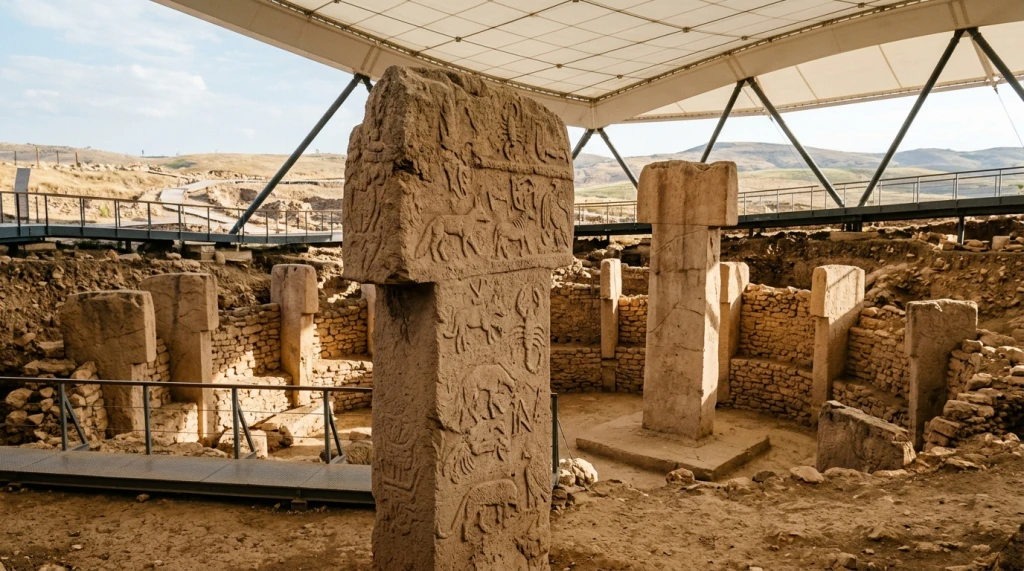
Göbekli Tepe is the earliest known monumental structure of the Neolithic period. This mound near the village of Örencik, in the Şanlıurfa province, entered the global archaeological agenda with excavations that began in the mid-1990s, and it shook long-held beliefs that settled life may have begun before agriculture. Visiting the site is different from viewing artifacts behind glass in a museum; under protective roofs, you walk through an ongoing excavation in progress.
What the Site Actually Shows
To date, six separate building complexes have been uncovered in the mound; the best known of these are the circular enclosures in building layers D and C. In each enclosure, smaller pillars are arranged around two large central T-shaped pillars, and on the upper parts of these pillars, animal figures — foxes, snakes, cranes, lions — are carved in relief.
These structures under protective metal roofs are followed by visitors along a transparent walkway; it is not possible to go down to the area and touch the pillars. While this may look like a restriction, it is essential for excavation sensitivity. From the viewing route on the upper plateau, especially when looking down over the building complexes, the integrity of the design is much easier to grasp.
When to Go: The Difference Between Seasons
The site is open all year round, but Şanlıurfa's climate significantly affects the timing of a visit. During the summer period from mid-June to late September, daytime temperatures at noon can exceed 40 degrees. The site is mostly open-air; in some sections there is no protective roof, so you are exposed directly to the sun.
April–May and October–November are the most suitable periods in terms of both weather and crowds. In the early morning, the light is also softer and the surface details of the pillars appear more distinct. Visits are possible in the winter months, but northerly winds can blow hard on the plateau, so dressing appropriately is important. Visitor density rises noticeably during Ramadan Bayram and summer holiday weeks.
Getting to the Site from Şanlıurfa
Göbekli Tepe is 18 kilometers from Şanlıurfa city center. There are direct flights to Şanlıurfa from many major cities in Turkey; GAP Airport is close to the city center. For those arriving by road, Şanlıurfa is accessible via Gaziantep or via the Adıyaman route.
To reach the site from the airport or city center, there are shuttle services, taxis, and car rental options. If you want to fit the Şanlıurfa Archaeology Museum, Balıklıgöl, and Göbekli Tepe into the same day, renting a car or arranging a private transfer saves time. For direct public transport access, it is best to check the current timetable before traveling, as service routes can change depending on the season and demand.
For those who prefer a tour package that includes Şanlıurfa, you can look at regional programs among the domestic tour options.
How Time Passes Inside the Site
At the entrance gate, tickets are issued and visitors are directed. As you enter, you first pass through a small exhibition area, where there are panels introducing the layers of the mound and a portion of the finds. The main pillar structures are on the hilltop, reached by a walk of a few minutes from here.
The walkway that lets you view the building complexes under protective roofs from above is designed in a circular layout; at each point you look at the structures from a different angle. Coming with an official guide significantly enriches the visit, especially in terms of interpreting the layers and reliefs. It can be explored without a guide, but much of the narrative may be lost.
A significant portion of the Göbekli Tepe finds are displayed at the Şanlıurfa Archaeology Museum. For this reason, most visitors prefer to see the museum first and then the site — or the reverse. Both orders work; what matters is devoting time to both on the same day.
Who It Suits and Who It May Not
Göbekli Tepe is undoubtedly a valuable stop for visitors interested in ancient structures, archaeology, or prehistoric history. However, setting the right expectations matters: this is not a large site like Ephesus, nor is it a visually striking landscape like Pamukkale. The pillars do not have a monumental grandeur; they are roughly 5–6 meters high. The real impact comes when you grasp what this building organization, dating back 12,000 years, means.
The site is accessible for families with young children, but some parts of the walkway have sloped ground, making stroller use difficult. On hot days, the risk of children being affected by the sun is high, so going early in the day is important. For visitors with limited mobility, the entrance and main walkway are largely accessible, but seeing the site fully requires walking at some points.
Keeping the Trip Broad: What Is Around
Göbekli Tepe fits into a single day on its own, but Şanlıurfa and its surroundings are dense enough to easily extend into a multi-day program. The area around Balıklıgöl in the city center, the Mevlid-i Halil Mosque, and Han el-Barur require close to half a day.
Harran is 44 kilometers south of Şanlıurfa; with its conical-roofed traditional structures, it is a stop that can be fitted into the same day as Göbekli Tepe. Karahantepe is a new archaeological site opened to the public in recent years as part of the Taş Tepeler project; it is necessary to confirm in advance whether it is open for visits and the transport conditions, since access to these sites can change during the season.
Practical Planning: Duration, Transport, and Things to Note
- Visit duration: 1.5–2 hours is enough for the site; combined with the Şanlıurfa Archaeology Museum, it makes a full-day program.
- Best season: April–May and October–November. In summer, don't miss the 08:00–10:00 window in the morning; midday hours are very hot.
- Transport: From accommodation in central Şanlıurfa, approximately 25–30 minutes by taxi, private transfer, or rental car. Check the daily shuttle schedule before traveling.
- Clothing: Comfortable walking shoes are essential; in summer, a sun hat and plenty of water. In winter, layered clothing against the wind.
- Guide: Official guide services in Turkish and English are available at the site; advance booking is recommended.
- Photography: Personal photography equipment can be taken into the site; permission procedures for commercial shoots may differ, so confirm in advance.
- Site rules: Going down to the pillars and the excavation area is prohibited; do not leave the walkway.
- For current prices and opening hours, the Türkiye Müzeler app or the official sources of the Ministry of Culture and Tourism are reliable references.
What to Look for When Evaluating the Visit
The most frequently asked question before visiting Göbekli Tepe is: "Is there really something worth seeing?" The answer depends directly on your expectations. If you go to the site with an archaeological context, having some understanding of the broader framework of the Taş Tepeler project, each of the pillars takes on a different meaning. If you are looking for a purely visual experience, combining it with the rest of Şanlıurfa and setting aside more time for the region creates a more rewarding program.
For those planning to go beyond Şanlıurfa and see the wider GAP region, the point to set time aside for is this: deciding in advance which sites to combine, especially stops like Harran and Karahantepe, requires planning transport from the outset. If you want to see the region as a whole rather than piece by piece, investing in a multi-day program results in far less loss of time and energy.