


How to Visit Ephesus Ancient City: Route, Duration and Visiting Order
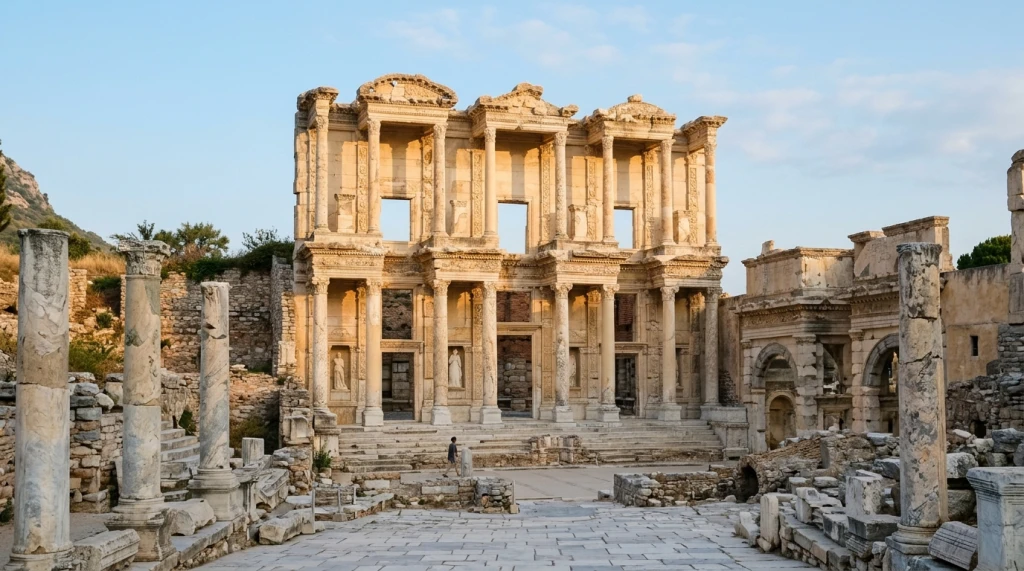
A significant number of visitors to Ephesus make the same mistake: they enter through the South Gate, walk to the Library of Celsus, take a few photos, and turn back. In reality, seeing the whole site requires at least three hours, and some sections need extra time. Even which gate you enter through shapes your entire route — and this small choice directly affects your fatigue level, when you encounter crowds, and the light in which you see the most impressive structures.
Where Is Ephesus, and How Large Is It?
The ancient city of Ephesus lies about 80 kilometers south of İzmir, within the district of Selçuk. The visitor area spreads over roughly 900 decares, but the section open to tourists is mostly the main route of about 2 kilometers between the North Gate and the South Gate. This route is not flat: it gently descends from the higher northern part toward the south. So depending on which gate you enter from, you are walking either uphill or downhill.
There are several entry points and different ticketing areas around the site. The South Gate, right beside the Library of Celsus, is close to the tour bus drop-off point, which is why it becomes the busiest entrance during the day. The North Gate, on the other hand, is reached from the Temple of Artemis side and usually offers a calmer start.
How Should You Plan the Route?
The recommended way to tour Ephesus efficiently is to enter through the North Gate and exit through the South Gate. This way you walk downhill, which is physically less tiring, and you reach the largest structure, the Library of Celsus, at the end of the route. Since most crowds move in the opposite direction, if you visit in the afternoon, the area in front of the library is relatively quieter.
From the northern entrance, you pass in order the State Agora, the Odeion, the Temple of Domitian, the Marble Road, the entrance to the Terrace Houses, and the Great Theatre. With a capacity of 25,000 people, the theatre is one of the most striking structures on the site; set aside a few minutes to climb its steps and sit down. From here, you turn toward the South Gate along Curetes Street and arrive at the Library of Celsus.
Terrace Houses: Separate Ticket, Separate Experience
The Terrace Houses are a separate paid section within Ephesus. They are multi-story residential structures from the Roman period, and their wall frescoes, mosaics, and traces of everyday life from that era are relatively well preserved here. They are displayed inside a protective covered structure.
Those who want to see this section need a little extra time — roughly 45 minutes to an hour. For those interested in archaeology or the history of Roman-period architecture, the visit is well worth it. For those whose expectation is only a general Ephesus tour, it may be worth weighing the entrance queue and the additional fee.
When to Go? Seasonal Differences
Ephesus is open for most of the year, but the season you choose seriously affects the quality of your visit. In July and August the site gets very crowded, and at midday the heat can reach challenging levels for an ancient city with little shade. If you go during these months, the most sensible choice is to be there right at opening time, early in the morning.
April, May, and October are the balance point in terms of both weather and crowds. Daylight is long, temperatures are manageable, and it is easier to take photos in front of the main structures. From November to March, visitor numbers drop noticeably; during this period the wind can be strong and the sky overcast, but the site offers a genuine sense of solitude — exactly what some visitors are looking for.
Keep in mind that in winter some sections may be partially closed or have restricted access due to maintenance and restoration work. For current information, it is useful to check the official sources of the Ministry of Culture and Tourism before your visit.
Selçuk: The Stop Beside Ephesus
It is possible to visit Ephesus on its own and return, but Selçuk offers several additional stops that deserve a full day or an overnight stay. The Temple of Artemis was counted among the seven wonders of the ancient world; today only a single column stands intact on site. It may look like a faded area visually, but considered together with its historical context, it is a deeply impressive place.
The Selçuk Archaeology Museum houses most of the finds removed from Ephesus — the Artemis statues, Roman-period works, and epigraphic documents are kept here. If the site alone feels insufficient, setting aside half an hour to an hour for the museum helps make what you saw in the ancient city more tangible. The village of Şirince is also about 8 kilometers away and is a good option for a quiet afternoon walk.
Who Is It Suitable For, and Who Is It Not?
Ephesus is the right destination for archaeology enthusiasts, history students, and travelers seeking a culture-focused day within an Aegean itinerary. Since walking about 3–4 kilometers over marble paving is required, the terrain can pose access difficulties in some places for visitors with walking limitations. Sun protection is essential; without a hat, sunglasses, and water, a summer visit becomes quite exhausting.
A note for families with young children: the site is uneven underfoot, long, and largely without shade. Early morning hours or the months of April and May offer a much more productive visit for these groups. Those who prefer a guided tour, if they want to cover the site in less time while understanding its context, will find it a good option — it can be visited without a guide too, but looking at the great structures without knowing why they matter often stays at the surface level.
Practical Planning Information
- Time: 3–4 hours for the main route, 4–5 hours if the Terrace Houses are included. A full day if the Selçuk Museum is added.
- Transport: There is a train connection from İzmir to Selçuk; the walking distance from the train station to the ancient city is about 3 kilometers, which can be shortened by dolmuş or taxi. Those arriving by car will find parking near both gates.
- Season: April–May and October are the most balanced periods. In July–August an early morning entry is recommended.
- Enter through the North Gate and exit through the South Gate — this direction is more comfortable both physically and in terms of crowds.
- Bring water and sun protection; there are sales points within the site, but prices are high.
- For current ticket prices and opening hours, check the official website of the Ministry of Culture and Tourism before your visit.
Final Check Before Your Visit
Clarifying a few things before touring Ephesus makes the day more productive: How many hours can you set aside? Do you want to see the Terrace Houses? Will you stay overnight in Selçuk or come for the day? Depending on your answers to these questions, your program takes shape on its own. The size of the site and the Aegean sun directly determine how much time and energy you will spend — planning this without taking it lightly is the shortest way to complete your visit and leave satisfied.
You can review the domestic tour options covering this region and find the one that suits your plans.