


How to Pack a Bag for Umrah: What to Take and What to Leave Behind
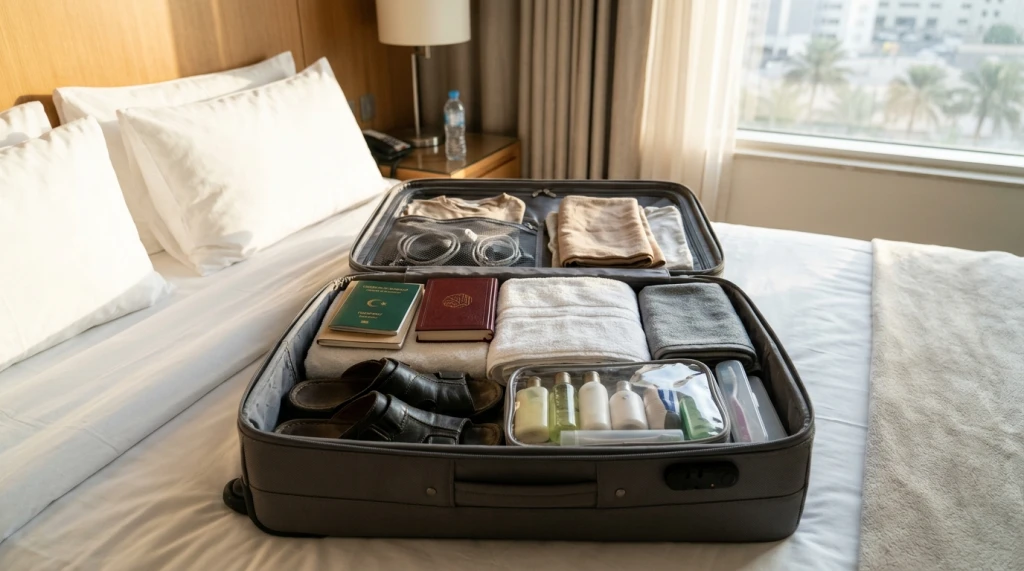
Before packing for your Umrah journey, most people get caught between two opposite mistakes: either they stuff the bag with everything just in case, creating a weight they cannot carry, or they forget something essential and panic in Mecca or Medina. A well-planned packing list, however, gives a clear path between these two extremes. The sections below cover concretely what to bring at each stage of the trip.
Suitcase or Carry-On: The Size Decision Comes First
Most Umrah tours include accommodation in both Mecca and Medina, with a transfer between the two cities. During this transfer, large luggage is placed in the bus's underside compartment, leaving only a small hand bag with you. For this reason, a medium-sized suitcase (usually up to 23 kg) combined with a small backpack or shoulder bag is the most practical solution.
Your carry-on should hold medications, a prayer mat, valuables and small items you will need on the long journey. The large suitcase should contain the ihram, clothing and heavier items that are not urgent. Given that airports can get crowded during Hajj and Umrah seasons, label both bags clearly.
Ihram: The Most Important Item, But Extras Take Up Space
For men, the ihram consists of two seamless white pieces of cloth. A good-quality ihram cloth both absorbs sweat and lasts a long time; thin, cheap fabrics can become uncomfortable when they retain moisture. Packing a spare ihram is a wise precaution, but more than two take up unnecessary space.
The sandals worn with the ihram should be simple and flat-soled, leaving the heel and top of the foot open. A thicker sole improves walking comfort on marble floors and keeps your feet from getting cold in large air-conditioned spaces such as the Masjid al-Haram. Women are not required to wear ihram, and you can find detailed information on this topic in the publications of the Turkish Presidency of Religious Affairs (Diyanet İşleri Başkanlığı).
Clothing: Think Simple, Comfortable and Versatile
Saudi Arabia's climate changes sharply with the seasons. In winter, nights in Medina can get cold, while in summer intense heat dominates the daytime. The indoor spaces of Mecca and Medina are heavily air-conditioned in every season. Therefore, you need both lightweight but modest clothing that works outdoors and a thin cardigan or shawl to keep you warm indoors.
Practical rule: for a five-night stay, four changes of clothes are sufficient, as most hotels offer laundry facilities. Extra clothing bulks up the bag and, if you have to carry it during tawaf and sa'i, weighs down your back. Choose dark colors; since you will go out several times a day, keeping things practical matters.
Personal Care and Hygiene: A List With Clear Limits
There are products you should not use while in ihram: scented soap, perfume and deodorant top the list. For this period, it helps to prepare unscented soap and unscented moisturizer. On non-ihram days you can use regular products, so take small sizes of both categories with you.
- Unscented soap and shampoo (for the ihram period)
- Unscented moisturizing cream (hands and feet dry out from frequent washing)
- Sunscreen (if you will be outdoors for long periods)
- Lip balm or moisturizer (the dry climate, especially in winter, makes it necessary)
- Nail clippers and a personal grooming kit
- Sufficient personal medication (along with copies of prescriptions)
- Travel-size oral care kit
- Wet wipes and a small hand sanitizer
Worship Items: Few, But Chosen Carefully
A prayer mat may not be necessary for praying on the marble floor of the Kaaba, but it is useful in outdoor areas and in Medina. A thin, foldable and easy-to-carry prayer mat is sufficient. Large, heavy prayer mats sound appealing but weigh on the shoulders.
A small Quran or translation can be easily used both during the flight and in waiting periods. Prayer booklets and Umrah guides are also available in Mecca, and Turkish editions are sold there as well. For this reason, carrying heavy religious publications from Turkey is not always necessary. A prayer bead (tesbih) takes up little space and makes counting easier in crowded environments.
Health and Safety: Details That Are Often Overlooked
Considering long periods of walking in crowded environments, hot or cold climates and fatigue together, some health preparations become important. Blister bandages are practically essential, especially for those who walk a lot on the first day. Standing for long periods on the marble floors of the mosque and the number of tawaf rounds increase rapidly within a few days.
A mask or thin face mask is recommended, especially during peak seasons. A throat spray and mild painkiller should also be in your bag. If you have chronic conditions, copies of your prescriptions should be kept separately in both your suitcase and carry-on; it is advisable to carry medications in their original boxes.
Practical Planning: Duration, Transport and Things to Watch
Standard Umrah tours last between 7 and 14 days, with part of that time spent in Mecca and part in Medina. Flights usually go via Istanbul or Ankara to Jeddah or Medina airport. The transfer between Mecca and Medina by bus takes about 4 to 5 hours; bringing small snacks, water and a neck pillow for this journey increases comfort.
If you want to compare current Umrah tour programs, accommodation arrangements and departure dates, you can choose a program that fits your travel calendar from among umre turu seçenekleri.
Information on passport validity, visa requirements and health conditions changes over time; for accurate and up-to-date information, be sure to check the official sources of the Ministry of Foreign Affairs and the Saudi Arabian Embassy before traveling. During peak periods (especially the weeks close to Ramadan), crowds at airports and mosques can reach very high levels; choose your program with these periods in mind.
What Not to Pack: A Short List of Unnecessary Weight
- Multiple spare ihrams (one spare is enough)
- Heavy and large religious publications (these can be obtained in Turkish in Mecca)
- Many different pairs of shoes (one comfortable pair of sandals and one closed shoe is enough)
- Hair dryers and large devices requiring charging (usually available in hotels)
- Expensive jewelry and eye-catching accessories
- Unnecessary amounts of cash (ATMs are widespread in Mecca and Medina)
Packing is really an exercise in setting priorities. When you pick up each item, asking "What happens if I don't bring this?" is a good filter. Comfortable sandals, ihram, medication, unscented care products and a small prayer mat: these are things you truly cannot do without. For everything else, Mecca and Medina have well-stocked markets, and it is possible to make up for many missing items there.