


Georgia Tbilisi Guide: Discover the Caucasus’s Most Accessible Capital
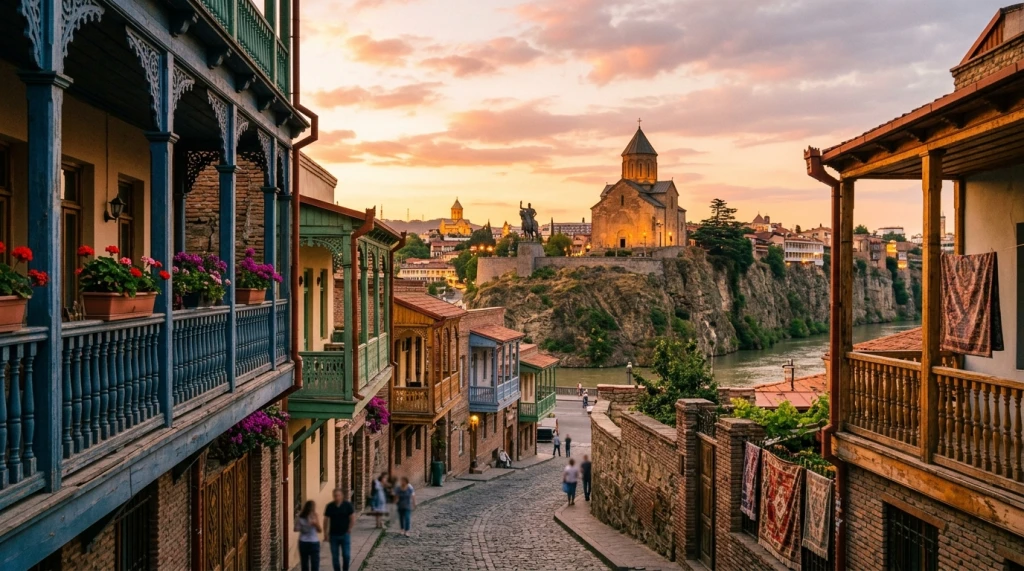
Tbilisi is a city built right at the midpoint of the passage eastward from Anatolia, along the bends of the Kura River. This capital, with a population of approximately 1.1 million, resembles neither the density of the Middle East nor the cool formality of Eastern Europe. Its historic fabric bears traces of Ottoman, Russian, and Persian influence; the architecture, meanwhile, is a strange yet distinctive mix of projecting houses with wooden balconies and rows of Art Nouveau eaves.
When Should You Go?
The most balanced periods for visiting Tbilisi are between April and June and between September and October. In spring, the streets of the Kala district are cool, the days are long, and the crowds have not yet peaked. In early September, markets coinciding with the harvest season add a distinct color to the city; grape festivals are held in the Kakheti region during these months. Temperatures can rise to 35–38 degrees in July and August, and the heat is quite noticeable on the city's stone-paved streets. During the winter months of December to February, average temperatures hover around 2–5 degrees. Snow is infrequent, but the weather can be cold and gray; nevertheless, the city does not lose its energy, and prices drop noticeably.
How to Get There from Turkey?
A direct flight from Istanbul to Tbilisi takes approximately 2.5–3 hours. Regular flights operate from Istanbul Airport and Sabiha Gökçen. There are also connection options from Ankara, Trabzon, and Antalya; however, routes with stopovers significantly extend the total travel time. The city can also be reached by road: you can cross the Turkey–Georgia land border via Erzurum or Kars and continue to Tbilisi; this route means a journey of approximately 8–10 hours. A taxi from the airport to the city center takes 20–25 minutes; ride-hailing taxis (Bolt and Yandex operate widely in Tbilisi) are significantly more affordable than airport taxis. The metro line extends to the airport and is practical, but using the metro with large luggage can be difficult in practice.
Entry requirements for Georgia and passport validity requirements may change from time to time. Before traveling, be sure to check the latest announcements from the Ministry of Foreign Affairs of the Republic of Turkey and Georgia's official consular sources.
What Do the City's Neighborhoods Tell You?
It is useful to think of Tbilisi as a series of distinct layers. The old city, Kala, stretches from the foothills of Narikala Fortress to Metekhi Bridge. Wooden-balcony houses, Armenian, Georgian, and Orthodox churches stand side by side in this area. It is easy to explore on foot, but the ground is stony and steep; comfortable shoes are essential for this district.
Rustaveli Avenue, meanwhile, is the city's cultural backbone, filled with Neoclassical buildings dating from the Russian period. The State Opera House, the National Gallery, and various art galleries line this avenue. Walking along the avenue is enjoyable outside July and August; during the hot months, finding shade around midday can be difficult.
The Mtatsminda district sits atop the city; it can be reached by funicular or on foot. For a panoramic view from below, early morning or sunset should be preferred over the afternoon; at sunset, if visibility is good, light arriving from the western hills illuminates the Kura Valley in vivid colors. The Marjanishvili and Vera neighborhoods, meanwhile, have come alive with cafés and small restaurants in recent years; they are a good option for those who want to see local life more closely.
Sulfur Baths: How Do They Work and What Should You Expect?
The Abanotubani district takes its name from the Persian word 'abano,' meaning 'bath.' Distinguished by their domed roofs and steam vents, these buildings are bathhouses heated by natural sulfur spring water. You enter by renting private cabins; some bathhouses also offer attendant services. The smell of sulfur is quite strong and can be unpleasant, especially upon first entering. Cabin prices vary by the hour; current rates are posted at the entrances to the bathhouses. Reservations are possible in most places and are recommended for weekends.
What Is There to See Around Tbilisi?
Kakheti, Georgia's wine region, is approximately 1.5–2 hours from Tbilisi. The village of Sighnaghi is the most visited point in the region, with its walled structure and views extending across the valley. It can be visited as a day trip, but staying overnight is also possible. Mtskheta is the former Georgian capital listed as a UNESCO World Heritage Site, just 20 kilometers from Tbilisi. Svetitskhoveli Cathedral is the most important structure here; it can fill with tour groups around midday, while early morning is quieter.
Kazbegi (Stepantsminda) in northern Georgia presents a different scene, sitting above 2,000 meters at the foot of the Greater Caucasus range. The location of Gergeti Church high on the mountain is a frequently photographed sight. It takes approximately 2.5–3 hours from Tbilisi by minibus or car. Temperatures at high altitude are significantly lower than in the city, so clothing should be layered. Sudden weather changes can occur even in summer afternoons.
Food and Markets
The two staples of Georgian cuisine are khinkali (dough parcels filled with meat or mushrooms) and khachapuri (cheese-filled bread). Khachapuri takes different forms depending on the region: Adjarian khachapuri stands out with its open boat shape, topped with egg and butter. For lunch, modest restaurants whose menus include khinkali are generally much better than tourist-oriented ones. For desserts, churchkhela — a string of walnuts dipped in grape juice — can be found at Tbilisi Bazaar; it is a good spot both for ready-made snacks and local shopping.
Who Is It Suitable For, and Who Is It Not?
Much of the old city is steep and the sidewalks are uneven; some areas may be difficult for people with limited mobility or those using strollers. The city is generally manageable to explore on foot, but it may require walking 10–12 kilometers a day, so you need to be prepared in advance. The food culture is centered on meat and dough; although options for vegan or gluten-intolerant travelers have increased in the city center, the selection is still limited. For active travelers, hiking routes such as those in Kazbegi are not well prepared or marked; going without a guide requires planning.
Among the international tour options covering Tbilisi and Georgia, you can choose the one that suits your schedule and length of stay.
Practical Planning Information
- Duration: Three days is enough for Tbilisi alone; if Kakheti or Kazbegi is added, extending the trip to 5–6 days makes sense.
- Best season: April–June and September–October. To avoid the summer heat, plan early mornings in July and August.
- Transportation: A direct flight from Istanbul takes approximately 2.5–3 hours. If choosing the overland option, the current crossing requirements at the Turkish–Georgian border should be verified.
- Getting around the city: The metro is practical and inexpensive; Bolt and Yandex operate smoothly in Tbilisi. From the airport to the city, you can choose the metro or a ride-hailing taxi.
- Currency: Georgian lari (GEL). ATMs are common in the city center; major hotels and restaurants accept cards, but small cafés and markets require cash.
- Language: Georgian is the official language, and Russian is widely spoken. English is sufficient in tourist areas but may not be useful away from the main avenues; knowing a few basic Georgian words opens doors.
- Safety: Tbilisi is generally a calm city; normal urban precautions are sufficient. However, follow the Ministry of Foreign Affairs' travel advisories for the current situation in border and transit areas.
- Packing: Flat-soled, non-slip shoes are essential for the old city. If you are going to Kazbegi, you will need layered clothing and a waterproof outer layer.
When deciding whether to visit Tbilisi, consider this: the city's real appeal emerges while walking through its neighborhoods rather than along crowded tourist routes. If you cram your itinerary, everything you see will pile on top of everything else. Instead of trying to fit 12 places into three days, making time to truly get to know a few neighborhoods is the only way to understand which part of the city appeals to you.