


What You Need to Know Before Visiting Mount Nemrut: Sunrise, Route, and Visit Schedule
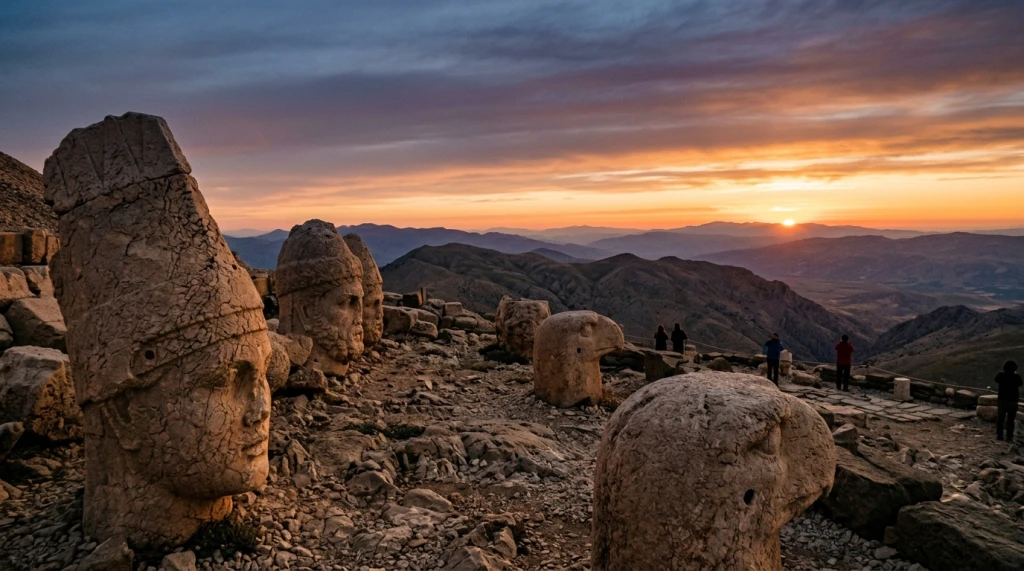
Mount Nemrut, located in the province of Adıyaman, is one of the world's few open-air monumental sites, featuring a tumulus and colossal statue groups commissioned by I. Antiochus, founder of the Kingdom of Commagene, in the 1st century BC. It has been on the UNESCO World Heritage List since 1987. There are two terraces on the mountain, one to the east and one to the west; on each terrace, the heads of statues depicting gods and the king stand detached from their bodies. Over the years, earthquakes and erosion have deepened this fragmentation, yet the resulting image creates a completely unique impact. Most visitors who reach the summit say that once they see this mountain, it becomes etched in their minds — but the quality of that first impression depends largely on planning.
Basic Information About the Statues: What You See and Why It Matters
The statues you encounter on the eastern and western terraces symbolize I. Antiochus's belief in his equality with the gods. In the lineup, he added his own bust alongside Apollo, Fortuna, Zeus, and Heracles. This original synthesis blending Persian and Hellenistic mythology makes Commagene one of the most fascinating kingdoms of its time. The bodies remain seated on their thrones, while the heads are much larger — some exceeding two meters in height. There is approximately a 50-meter walk between the terraces. The eastern terrace receives the best morning light, while the western terrace is optimally lit in the afternoon and at sunset. Knowing which terrace to focus on at what time is important not only for photographers but also for those who simply wish to observe.
When to Visit: Seasonal Differences and the Best Period
The visiting window for Mount Nemrut extends from early May to late October. During winter months, the mountain road is mostly closed; travel becomes dangerous due to snow and ice. The peak tourist season occurs during July and August, but even at the summit, nighttime temperatures can drop to 10-12 degrees Celsius, and winds can be strong — so bring an extra layer of clothing. The most balanced weather falls between late June and September: sunny and warm during the day, cool at night, manageable with layered clothing. Early October is favorable both in terms of weather and crowd levels, and the surrounding landscape takes on a different hue. A rainy night could completely shroud the morning terrace in clouds; you cannot eliminate this possibility, but statistically, the period from June to September tends to be clearer.
Sunrise or Sunset: The Difference Between the Two Options
Almost all visitors ask this question. The eastern terrace is positioned where the sun rises directly over the statues; therefore, sunrise sessions are viewed from there. Sunset sessions take place on the western terrace. Both can be done on the same day: you can visit the western terrace before noon and stay until sunset, or vice versa. However, reaching the mountain for sunrise requires climbing after midnight, bringing both cold and fatigue. The silhouette of the statues emerging in the first morning light creates a different effect; those who choose this option often return more satisfied. Sunset is logistically easier and offers equally impressive color transitions. Which you choose depends largely on where you are staying.
Climbing to the Summit: Trails and Physical Preparation
Vehicles can reach a designated parking point; from there, the hike to the summit takes about 20-25 minutes. The path is paved with stone and partially stepped; sturdy-soled sneakers or trekking boots are sufficient, no special equipment is required. For night climbs, a flashlight or headlamp is essential — lighting can be insufficient. For children and elderly individuals, the hiking difficulty can be considered moderate: the slope is not steep, but the paving stones are uneven and require caution in the dark. After reaching the plateau where the statues are located, the walk between the two terraces is flat and short. A windbreaker or thin jacket must always be in your bag to protect against the summit wind; even if it is 30 degrees at the bottom, be prepared for a 10-degree difference at the top.
What Else Is Around Nemrut: Integrating into the Southeast Route
It is possible to travel solely for Nemrut, but including the region in a broader itinerary makes the visit much more efficient. Karakuş Tumulus and Cendere Bridge, near central Adıyaman, are Commagene-era structures that can be seen on the same day. Birecik and Halfeti offer a completely different landscape along the Euphrates River; Rumkale and submerged ancient village ruins in Halfeti are particularly striking. Moving south connects you with the Şanlıurfa and Göbeklitepe route; Adıyaman to Şanlıurfa is approximately 170 kilometers. Consequently, Nemrut has become a natural part of GAP tours. Among domestic tour options, joining a program that covers the region via domestic tour packages is the most practical logistical choice for those wishing to see multiple sites in a single trip.
Practical Planning Information
- Duration: One full day is sufficient just for Nemrut; allocate at least 2-3 days if including the wider region.
- Transportation: The nearest airport is Adıyaman Airport, with regular flights from Istanbul and Ankara. Alternatively, access by road from Malatya or Gaziantep airports is also possible.
- Mountain ascent: You can drive up via Karadut village (south approach) or Narince village (north approach); the north route is slightly longer but offers a different view. Minibuses and shuttle services operate on both routes.
- Accommodation: Karadut village and Adıyaman city center are the main options; those heading out for sunrise must spend the night in the village or near the mountain.
- Clothing: Layered clothing is essential regardless of the season. Bring a windbreaker and a thin jacket.
- Night climb: Always carry a flashlight or headlamp in your bag; a phone flashlight may not last long enough.
- Tickets: Entry to the site is paid; current rates can be tracked on the official website of the Ministry of Culture and Tourism.
- Seasonal recommendation: Late June to September is the most balanced period; early October is a good option for those wanting to avoid crowds.
What to Consider When Evaluating Your Visit
Mount Nemrut is one of the rare sites that remains impressive even amidst morning fog, clouds, or technical mishaps. However, weather conditions directly affect the quality of the visit; keep this possibility in mind when planning. Deciding on a sunrise or sunset session determines your accommodation location and schedule — clarifying this in advance ensures everything else falls into place. Whether you view the region as a standalone stop or as part of the Southeastern Anatolia route shapes your allocated time and lodging preferences. When making your decision, consider the season, your physical preparation, and whether you wish to include surrounding attractions.