


Things to Know Before Visiting Safranbolu: Historic Bazaar, Mansion Accommodation, and Visit Schedule
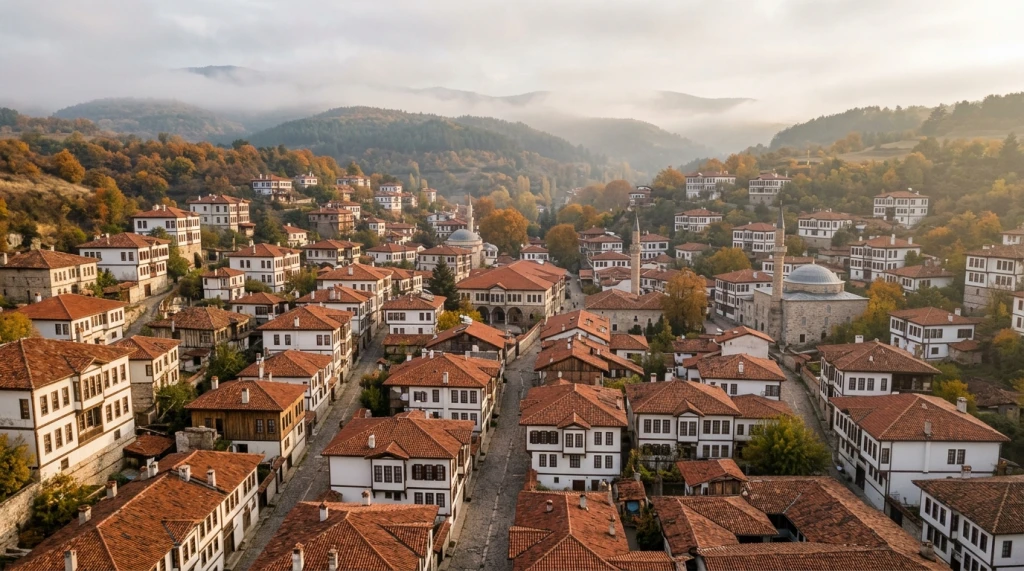
Safranbolu is a small district affiliated with the province of Karabük; however, it houses one of the best-preserved Ottoman urban fabrics in Turkey. The historic core of the city has been on the UNESCO World Heritage List since 1994. This status has led to the refunctionalization of thousands of Ottoman-era wooden mansions and largely preserved the street fabric. If you are thinking of visiting Safranbolu, you will get much more out of your trip if you plan it not just as a photo stop, but as a living city where you can wander, eat, and stay.
Understanding the City's Structure: Three Different Neighborhoods, Three Different Experiences
Safranbolu actually consists of three separate settlement areas, each with a character distinctly different from the others. Çarşı Mahallesi (Bazaar Neighborhood) is the area where the historical fabric is most intensely experienced; the Ottoman-era bedesten (covered market), hamams (baths), mosques, and stone streets are located here. It is also the focal point of tourism.
Bağlar Mahallesi (Vineyards Neighborhood), on the other hand, is located about three kilometers away from the Bazaar, perched on a hill. This is where large mansions built by wealthy families during the Ottoman period to spend the summer are located. It is quieter and has fewer visitors—but it also hosts the most impressive examples of Safranbolu mansions. Yörük village is another option for those seeking a rural atmosphere away from the crowds, located slightly outside the city. If you want to see all three, you need to plan for at least two nights.
What to See and How Much Time to Spend in the Historic Bazaar
The Kazdağlıoğlu Mosque and the adjacent Covered Bazaar, located in the center of Çarşı Mahallesi, serve as a functional reference point for the start of the visit. Inside the bazaar, there are shops selling saffron products, handmade slippers, and Safranbolu's famous lokum (Turkish delight); however, as with every historic bazaar that has turned into a tourist spot, original merchants and souvenir shops are intermingled here.
For those who wish to see the main architectural heritage, Hidayet Mosque and the narrow streets around it, Cinci Hamam, and the 18th-century Cinci Han hold more value. Although the inner courtyard of Cinci Han has undergone restoration, it retains its original masonry structure. Making a time reservation in advance for a hamam visit provides practical convenience, especially on weekends.
Mansion Accommodation: The Difference Between Expectation and Reality
Staying overnight in a historic mansion in Safranbolu is one of the strongest reasons to visit the region. Some of these restored mansions have been converted into small boutique hotels; wooden ceilings, bay windows, and original floor coverings have been largely preserved.
However, a few realistic notes on expectations: Rooms can be narrow; noise insulation issues inherent to old structures may arise; some mansions do not have parking, and pulling up to the door with a car may not be possible. Mansions inside the Bazaar are within walking distance of everything, but if you are sensitive to noise from the streets at night, keep this in mind. Mansions in Bağlar Mahallesi are quieter, but you will need to walk or drive to the Bazaar in the morning. While evaluating both options, you can review programs that fit your schedule among current domestic tour options.
When to Visit: The Real Differences Between Seasons
Safranbolu's climate experiences four distinct seasons. Spring, from mid-April to early June, coincides with mild weather and lush greenery; this period is when Bağlar Mahallesi looks its best. Autumn, between September and November, offers a different atmosphere with yellow and red leaf colors and competes with spring in terms of photography.
During the summer months (July-August), the city becomes seriously crowded on weekends; there is an influx of day-trippers or short-stay visitors from Istanbul, Ankara, and Izmir. Choosing weekdays during this period makes it easier to find accommodation and stroll comfortably through the streets. In winter, the city quiets down; some mansions may close, and access to Bağlar Mahallesi can become difficult in snowy conditions. However, January and February hold a special charm for those who wish to see a snow-covered silhouette of Safranbolu.
Food and Daily Life: Getting Into the City's Rhythm
Due to its proximity to the Black Sea region, Safranbolu cuisine shares some common ingredients but has its own unique sweet culture. Saffron, the plant that gives the city its name, was once grown intensively in the region; although production has decreased significantly today, sweets flavored with saffron and saffron lokum still carry a local identity. Lunch at kebab houses and small eateries inside the Bazaar is eaten in a much quieter environment compared to dinner.
Walking in the Bazaar early in the morning, before the shops open, is a separate experience. When the stone streets are empty, the texture of the wooden facades is visible much more clearly. The period between 15:00-17:00 in the afternoon is the busiest time in the Bazaar; walking in the narrow streets becomes difficult during these hours. Knowing this, it is more efficient to allocate time for street photography early in the morning or in the late afternoon.
Who Is It Suitable For, And Who Is It Not?
Safranbolu is a very appropriate choice for those genuinely interested in Ottoman-era urban architecture, those wanting to spend a slow-paced weekend, and those curious about the experience of staying in a historic mansion. Staying for two nights is sufficient to see the city without rushing.
On the other hand, it must be stated clearly: Safranbolu is not a large city; it does not offer sea or mountain activities. It is not the right destination for those seeking intense nightlife, party scenes, or beaches. It is suitable for families; especially streets within walking distance and open spaces provide a comfortable environment for groups with children. For visitors with mobility restrictions, the sidewalk structures and stone streets in some parts of the historic bazaar can pose difficulties.
Practical Planning: Duration, Transportation, and Things to Note
- Recommended duration: 2 nights, 3 days. This time is sufficient for those who wish to see the Bazaar, Bağlar Mahallesi, and Yörük village separately. If you limit yourself only to the Bazaar, a full day and one night can also be utilized.
- Transportation — Bus: Regular bus services operate from Ankara and Istanbul to Karabük. From Karabük city center, you reach Safranbolu by minibus or taxi, a distance of approximately 9 kilometers.
- Transportation — Train: Karabük has train connections; the Ankara-Karabük line can be considered as an option. You need to check current departure times on TCDD's official website.
- Transportation — Car: Approximately 2.5-3 hours' drive from Ankara. If you come to Safranbolu by your own car, it is much more practical to leave your vehicle in the parking lots at the Bazaar entrance and walk inside; maneuvering with a car in narrow streets is difficult.
- Accommodation reservation: It is recommended to book at least 2-3 weeks in advance for weekends between April and November; popular mansions fill up early during this period.
- Weather conditions: In winter, access by car to roads leading to Bağlar Mahallesi can become difficult when they are snowed in; if you choose this season, ask your accommodation about transportation conditions in advance.
- Photography: The most suitable light hours are between 07:00-09:00 in the morning and 17:30-19:00 in the evening; these periods also coincide with the lowest crowd levels.
You don't need to wait for the perfect season to visit Safranbolu; each season offers something different. But when making your decision, ask yourself this question: Are you going to explore the city, or to spend time within it? If it's the latter, add one more night and plan to wake up early. The Bazaar presents itself in its clearest form before the visitors arrive.