


How to Explore Prague: Historic Center Neighborhoods and Itinerary
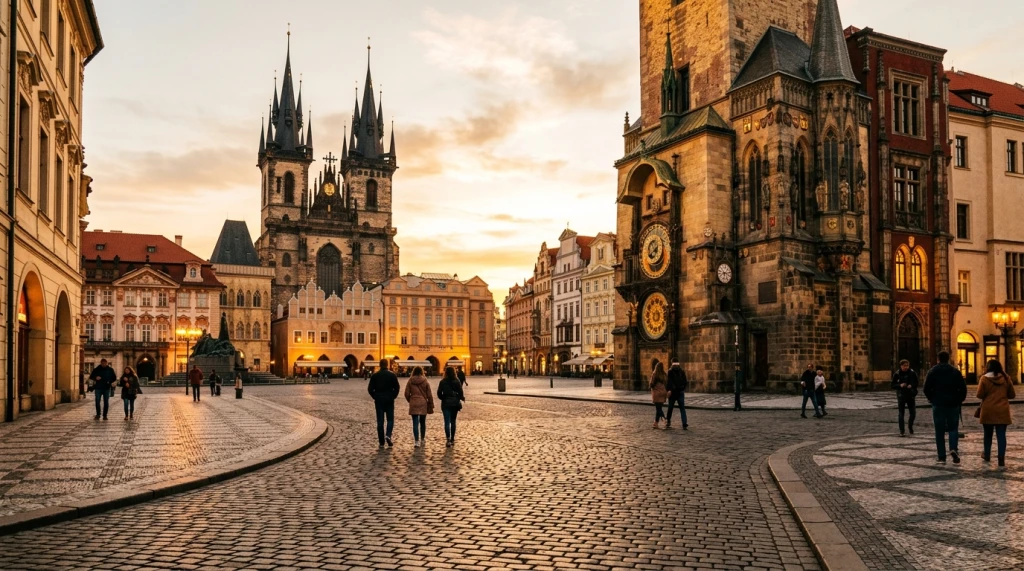
Prague is the capital of Czechia, located geographically right in the heart of Central Europe on both banks of the Vltava River. Since it suffered little damage during World War II, the city has preserved almost all of its architectural layers, ranging from the Middle Ages to Baroque and from Gothic to Art Nouveau. This makes Prague exceptionally diverse architecturally, but it also results in high visitor numbers. With the right neighborhoods, visiting at the right times, and a few practical tips, it’s possible to avoid most of the crowds.
Understanding the City’s Structure: What Each Neighborhood Offers
Historically, Prague consists of five main districts. Staré Město (Old Town) is the most tourist-heavy area, encompassing the square with the Jan Hus Monument, the Orloj astronomical clock, and narrow medieval streets. The square itself is crowded throughout the day; visiting it between 8:00–9:00 in the morning or after 7:00 in the evening offers a much quieter experience. Josefov is the name of the old Jewish quarter, located within Old Town; it includes six synagogues and a historic cemetery, and requires a separate ticket. Malá Strana (Little Island) stretches along the western bank of the river, at the foot of Prague Castle, featuring quieter streets and Baroque-era buildings. Hradčany is the hill that houses the castle and cathedral. Vinohrady and Žižkov, unlike the rest of this list, are residential areas shaped by late 19th-century architecture and centered around local life; they make for a great relaxing spot if you’re tired of the main tourist hubs.
When to Go: The Real Difference Between Seasons
As Prague is a city that remains active throughout the year, each season has its own unique appeal. Spring, especially from mid-April to late May, is a balanced time to explore the city before crowds reach their peak; days start to lengthen, with average temperatures around 15–20 degrees Celsius. June through August is both the busiest and most expensive period; Old Town Square becomes so crowded that it’s hard to move around after 10:00 in the morning. September and October are preferred by many experienced travelers: autumn colors become more vivid along the Vltava banks and in parks, crowds decrease, and prices drop. Winter sees a brief surge in activity at the beginning of December with Christmas markets; January and February are the quietest, cheapest, and coldest times, with average temperatures below zero and only eight hours of daylight on some days.
Prague Castle: How to Explore It and How Much Time to Allocate
Prague Castle, one of the largest castle complexes in the world, is not actually a single building but rather a walled city within the city. It houses St. Vitus Cathedral, the Golden Lane (Zlatá ulička), the Old Royal Palace, and several museums. There are two main routes to reach the castle: the classic path starting at the Malostranská metro station involves a steep climb that takes about 20–25 minutes; taking tram line 22 to the Pražský hrad stop then allows you to reach the same spot with a flat walk. Only visiting the exterior of the cathedral and its courtyards is free; tickets are required for the interior spaces and museums. It’s realistic to allocate at least three hours to explore the entire complex; if you want to avoid crowds, aim to enter by 9:00, as tour groups usually arrive between 10:00–11:00.
Charles Bridge and the Vltava Banks: Pay Attention to Timing
Charles Bridge is the city’s symbolic structure, connecting the two banks and featuring 30 Baroque statues. If you want to take photos or cross the bridge peacefully, go between 6:30–7:30 in the morning when it’s quiet with sunrise; as the day progresses, the bridge becomes fully crowded. Walking along the Vltava banks, especially toward Nusle on the eastern bank, offers a quieter experience and the best view of the Hradčany silhouette. Vyšehrad hill on the southern bank is often overlooked by visitors; it has a Gothic church, a cemetery dedicated to the city’s founders, and a wide viewing area overlooking both sides of the river. A five-minute walk from the Vyšehrad metro station takes you there.
Local Transportation and Urban Movement
Prague’s metro, tram, and bus network work together to cover the entire city; tickets are valid for all three. Although the historic center is walkable, using trams or metros to reach certain places saves time and reduces fatigue. There is no direct metro connection from the airport to the city; the most practical public transportation option is a combination of bus and metro. You can check up-to-date information on how to transfer in advance on the website of Prague’s Public Transport Authority (DPP). Renting a car in the city center is generally unnecessary; traffic and parking issues don’t make exploring the center easier. Considering the abundance of cobblestones and steep streets, choosing comfortable shoes is a crucial practical detail.
Trip Planning: Practical Tips
A realistic duration for a trip to Prague is 3–4 full days. It’s possible to briefly see Old Town and the Castle in two days, but if you want to include less-known areas like Josefov, Vinohrady, and Vyšehrad, four days are needed.
- Transportation: There are direct flights from Turkey to Prague (Václav Havel Airport); connecting flights usually go via Vienna, Munich, or Frankfurt.
- Currency: Czechia is not part of the Eurozone; the local currency is the Czech Koruna (CZK). Exchange rates at currency exchange offices in the city center can vary significantly, while bank ATMs usually offer more favorable rates.
- Seasonal recommendation: Late September and early October stand out for their balance of fewer crowds and pleasant weather. Mid-April in spring also offers a similar balance.
- Buy tickets in advance: Purchasing online tickets for St. Vitus Cathedral and the Prague Castle complex eliminates the need to wait in ticket lines.
- Visas and entry: Czechia is a member of the Schengen Area. Passport validity and entry requirements can change; it’s necessary to confirm them through the Ministry of Foreign Affairs’ current resources or the Czech Embassy before traveling.
- For up-to-date tour options, you can find suitable options among foreign tour packages.
What to Consider When Deciding
Prague has the flexibility to be either a short city getaway or part of a longer Central European itinerary. With its rich historical fabric, it’s an excellent destination for those interested in architecture, history, and city walking. Instead of visiting many museums one after another, focusing on just one main site per day and using the rest of the time to explore neighborhoods yields a more satisfying experience. When planning your trip, clarifying the season, number of days you want to spend, and the pace of travel you prefer greatly determines what you’ll gain from Prague.
You can review suitable options among foreign tour packages covering this area